

1400 | Issue #17
In 2010, a psychologist named Daniel Meegan ran a quiet experiment at the University of Guelph. Students watched a string of their peers receive top grades in a course where grading was absolute. No curve, no quota, an unlimited supply of A grades. Then they judged the next student’s chances, and the judgments dropped. Every A grade handed out made the next one feel less likely, even though nothing was being used up. Meegan called it Zero-Sum Bias: the mind’s habit of treating an unlimited resource as one shared pot.
The wiring is old. For most of human history the pot was real. Food, land, safety, all genuinely scarce, and someone else’s gain often was your loss. The brain kept the accounting software, and now it runs on everything, including the things that were never scarce at all.
You run the same software all the time. A colleague’s promotion lands in the feed and something tightens, as if a door somewhere just closed on you. A friend’s project takes off and your own progress suddenly looks slower, though nothing about it changed. Someone your age gets the thing you have been working toward, and the first thing that arrives is not happiness. It is arithmetic.
A while ago a friend called me with good news, the kind of news I had been quietly working toward myself. And I heard it happen in real time. Congratulations came out of my mouth on schedule, warm and correct, but there was a split second before it where something dropped, as if their news had been subtracted from somewhere, and the somewhere was me.
I have thought about that split second a lot since. They took nothing from me. Their news did not move my life one centimetre in any direction. There was no pot we were both drawing from. And still, some accountant in the back of my head closed a ledger and marked me down.
I catch it faster every time now. The congratulations are real, and they arrive quicker than they used to. But the drop still fires first, and I have stopped pretending it does not.
Then I found the split second, named and answered, in a text over 1400 years old.
وَلَا تَتَمَنَّوْا۟ مَا فَضَّلَ ٱللَّهُ بِهِۦ بَعْضَكُمْ عَلَىٰ بَعْضٍۢ لِّلرِّجَالِ نَصِيبٌۭ مِّمَّا ٱكْتَسَبُوا۟ وَلِلنِّسَآءِ نَصِيبٌۭ مِّمَّا ٱكْتَسَبْنَ وَسْـَٔلُوا۟ ٱللَّهَ مِن فَضْلِهِۦٓ إِنَّ ٱللَّهَ كَانَ بِكُلِّ شَىْءٍ عَلِيمًۭا
“And do not wish for that by which Allah has made some of you exceed others. For men is a share of what they have earned, and for women is a share of what they have earned. And ask Allah of His bounty. Indeed Allah is ever, of all things, Knowing.” (Surah An-Nisa, 4:32)
This ayah, a verse of the Quran, opens on the exact reflex. Not theft, not sabotage, just the wishful sideways glance at what someone else was given. Then it dismantles the maths underneath it. For each person, a share of what they earned. Separate accounts. Islam refers to the whole of what is allotted to you as rizq, provision in the widest sense, wealth, health, openings, timing, all of it, and the claim here is precise: their portion and yours were never drawn from each other. The ledger lives in your head. The pot you keep auditing does not exist.
A hadith, a recorded saying of the Prophet ﷺ, then does something more surprising than banning the feeling. It redirects it. The Prophet ﷺ said:
“Do not wish to be like anyone except in two cases. (The first is) A person, whom Allah has given wealth and he spends it righteously; (the second is) the one whom Allah has given wisdom (the Holy Quran) and he acts according to it and teaches it to others.” (Sahih Al-Bukhari 73)
There is a name for the dark version, hasad, envy that resents the blessing and wants it gone from the person who has it. The hadith does not pretend the urge to look at others can be deleted. It gives it two targets, and look at what they share: both are gains that take nothing from anyone, and both point at what is done with a blessing rather than the blessing itself. The wanting survives. The subtraction does not.
Then a second hadith goes after the accounting model itself:
“Charity does not decrease wealth, no one forgives another except that Allah increases his honor, and no one humbles himself for the sake of Allah except that Allah raises his status.” (Sahih Muslim 2588)
Read it slowly. Three transactions that look like pure loss on paper. Giving money away, surrendering your right to get even, and humbling yourself. And all three are declared gains. This is not a nicer attitude toward the pot. It is a statement that the pot was never how any of this worked.
Which leaves the antidote, and it was sitting in the first ayah the whole time. And ask Allah of His bounty. The instruction for the split second is not to suppress it. It is to reroute it. Stop auditing what they were given, and take the request to the One who apportioned it all.
The drop you feel when someone else wins is not information about your life. It is old software misreading the world, booking a loss that never happened. Their portion was never in your account. Yours was never at risk from theirs.
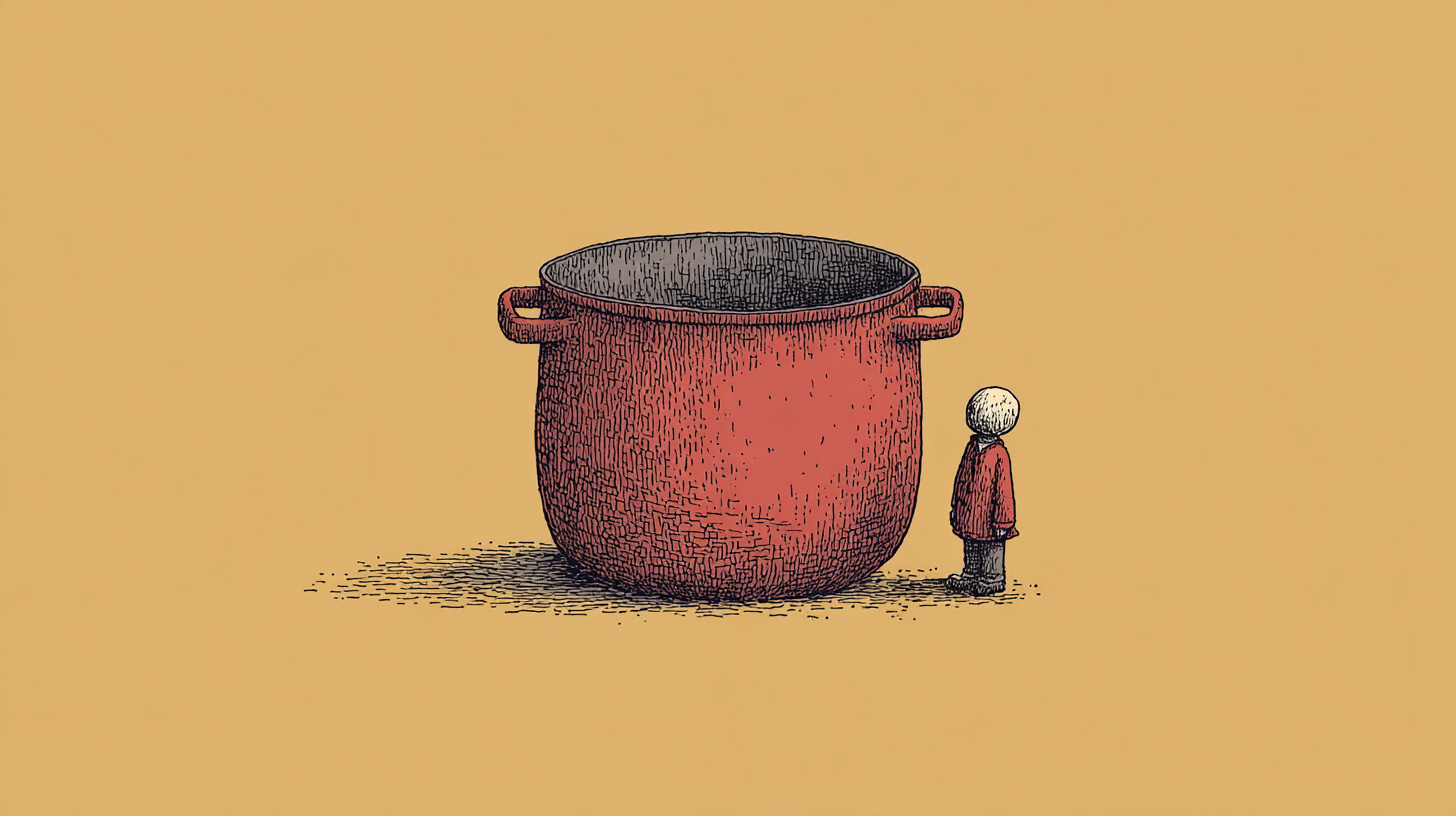
There was never one pot.
Something to do: Message the person whose recent win quietly stung, and congratulate them properly, the full version you held back.
Something to think about: How much of what you want do you only want because someone else got it first?
Quran translations: Sahih International. Hadith translations: Sunnah.com.