

1400 | Issue #5
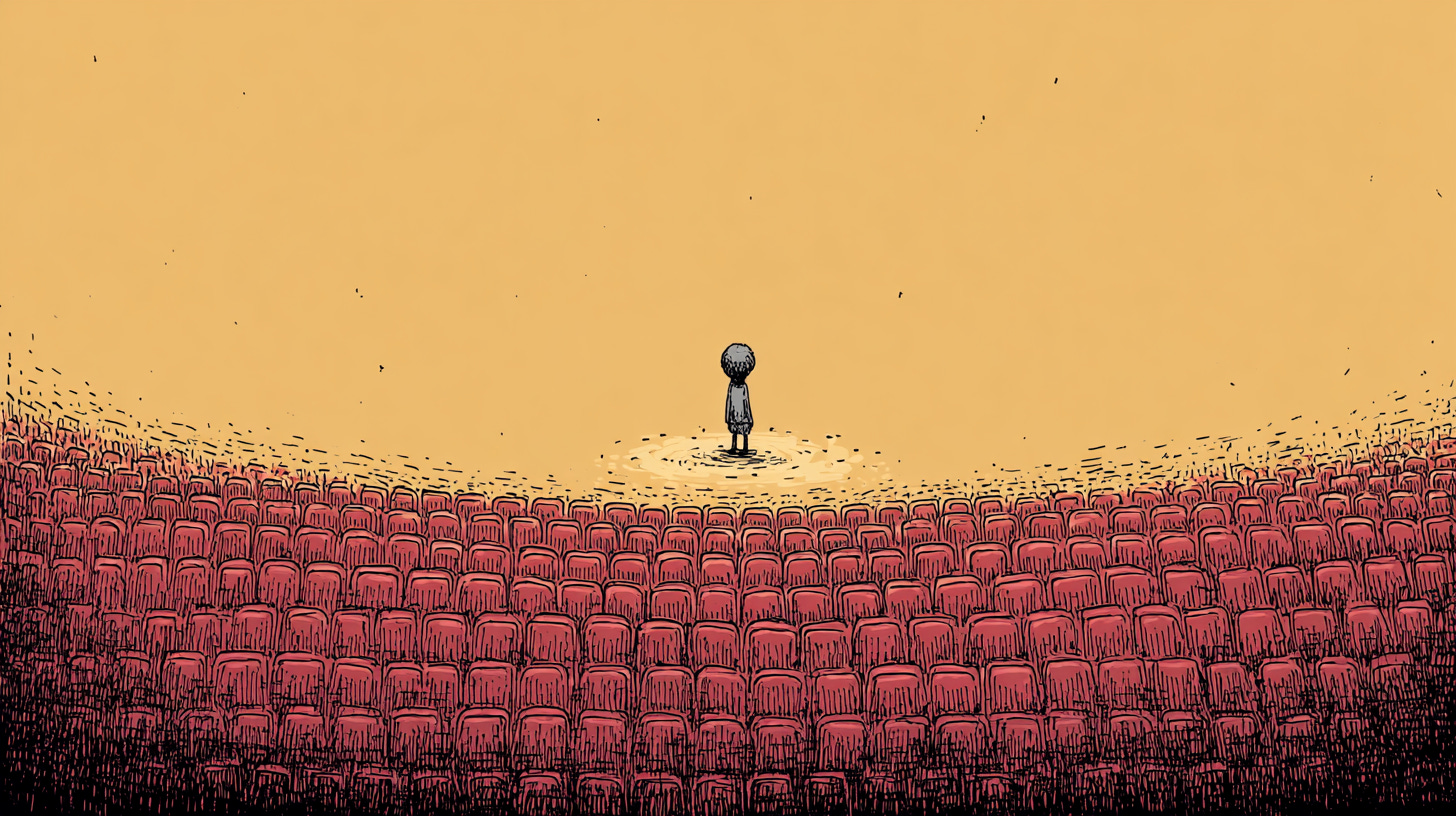
In 2000, researchers ran a study that most of us would rather not think about. They asked participants to wear embarrassing T-shirts into a room full of strangers and estimate how many people noticed. The participants guessed about half the room noticed. In reality, only about one in four did. The pattern held across contexts, not just clothing but comments, mistakes, pauses, all of it. We walk through the world assuming others are tracking our stumbles with the same intensity we feel them. They are not. They are too busy running the same imaginary camera crew on themselves. The Spotlight Effect is the gap between how watched you feel and how watched you actually are.
I remember standing in the corridor outside a meeting room after mispronouncing a technical term in front of fifteen people. Not a major word. Not a career-ending slip. Just a small term said wrong in a quiet moment. I stood there not moving, replaying the slip, scanning my memory for reactions. A raised eyebrow. A glance. Anything. There was nothing. Nobody had flinched. Nobody had paused. By the time I reached my desk I had already decided that three people definitely noticed and were probably still thinking about it. The meeting had moved on thirty seconds after I said it. I had not moved on three hours later. Performing damage control for a judgment that never existed. The worst part is I knew it was irrational while I was doing it. I could feel myself constructing the scene, assigning reactions to people who had already forgotten my name, building a courtroom in my head where I was both the accused and the jury. I still do this. I catch it faster now, but I still do it.
The concept existed long before it had a name.
وَلَقَدْ خَلَقْنَا ٱلْإِنسَـٰنَ وَنَعْلَمُ مَا تُوَسْوِسُ بِهِۦ نَفْسُهُۥ وَنَحْنُ أَقْرَبُ إِلَيْهِ مِنْ حَبْلِ ٱلْوَرِيدِ
“And We have already created man and know what his soul whispers to him, and We are closer to him than [his] jugular vein.” (Surah Qaf, 50:16)
This ayah, a verse from the Quran, does something the research cannot. It names the real audience. You are anxious about a room full of people who forgot your face five minutes after you left. Meanwhile, the One who hears what your soul whispers to itself, the insecurity you buried before it surfaced, the thought you did not say out loud, is closer to you than the blood moving through your own neck. The Spotlight Effect says the crowd is not watching. The Quran says the One who matters is, and it is not the crowd.
The antidote is not to stop caring about being seen. It is to recalibrate who you are seen by. The Quran names this recalibration directly:
وَهُوَ مَعَكُمْ أَيْنَ مَا كُنتُمْ وَٱللَّهُ بِمَا تَعْمَلُونَ بَصِيرٌ
"And He is with you wherever you are. And Allah, of what you do, is Seeing." (Surah Al-Hadid, 57:4)
The person whose opinion kept you up at night does not know your intention, your effort, or your internal state. Allah does.
The Sunnah, the body of the Prophet’s ﷺ teachings and example, offers the shift that makes this land. The Prophet ﷺ reframes the entire question of being seen:
“Worship Allah as if you are seeing Him, for though you don't see Him, He, verily, sees you.” (Sahih Muslim 8a)
This is the concept of ihsan, an Arabic term for excellence through awareness of being seen by Allah. It does not say stop feeling watched. It says redirect where you point that feeling. The consciousness was never the problem. The audience was. When the gaze you carry yourself before shifts from the crowd to the One who already sees everything, the weight changes. Not because you stopped caring, but because the thing you were caring about was never the thing that mattered.
The room forgot your name five minutes after you left. The One closer than your jugular vein already knew your intention before the words left your mouth. You were never unseen. You were just looking at the wrong audience.
Something to do: The next time you catch yourself replaying an awkward moment, stop and ask honestly: did anyone actually react, or are you supplying the reaction yourself?
Something to think about: Whose approval are you performing for, and would it still matter if no one was watching?
Quran translations: Sahih International. Hadith translations: Sunnah.com.