

1400 | Issue #18
Your calm version made a promise that your heated version never agreed to. You rehearse a conversation in the shower with a measured voice and reasonable words, the right thing said at the right volume. Then when the moment arrives, the calm strategist who wrote the script is nowhere to be found, someone else is standing in your body and they didn’t read the notes.
The gap is there. The plan and the person never met. A behavioural economist at Carnegie Mellon named George Loewenstein called this The Hot-Cold Empathy Gap. When you are in a calm and cold state, you can’t picture what you’ll feel when you’re angry, afraid, starving or in pain. You always underestimate it because you can’t picture it. The cold you overestimates how much control the hot you will have, and will make the plans on that false confidence, and will always get surprised every time they collapse.
We’ve all been in both directions. You shop while hungry and buy for a version of yourself who is starving. During the day you keep your composure and promise you will keep it, and during the night, that composure is the first thing to go.
Last week I was in a very calm and generous mood, I planned to be the kind of father who will be patient, and go kneel to my child’s level and lower my voice instead of raising it. I really meant to be this kind of father that day.
At the end of the day, I asked my son for a small thing four times, and he refused all four times. I was tired and tense, and I noticed my voice go up a bit, enough for the room to change, and enough that my son’s little innocent face looked at me differently. The calm father I planned to be was not there, he clocked out and was nowhere to be found.
I don’t have a nice and clean ending, but I did apologise to my son, it made him happy. I kept trying to be the perfect father, but the same tired stranger shows up at the end of the day. I’m not very surprised when that happens, most of the nights I keep him out of the room, and some nights he finds the door.
Psychology named the gap and built frameworks to manage it. A text far older named it too, then refused to let the heated version of me decide anything that mattered.
ٱلَّذِينَ يُنفِقُونَ فِى ٱلسَّرَّآءِ وَٱلضَّرَّآءِ وَٱلْكَـٰظِمِينَ ٱلْغَيْظَ وَٱلْعَافِينَ عَنِ ٱلنَّاسِ وَٱللَّهُ يُحِبُّ ٱلْمُحْسِنِينَ
“Who spend [in the cause of Allah] during ease and hardship and who restrain anger and who pardon the people - and Allah loves the doers of good.” (Surah Ali ‘Imran, 3:134)
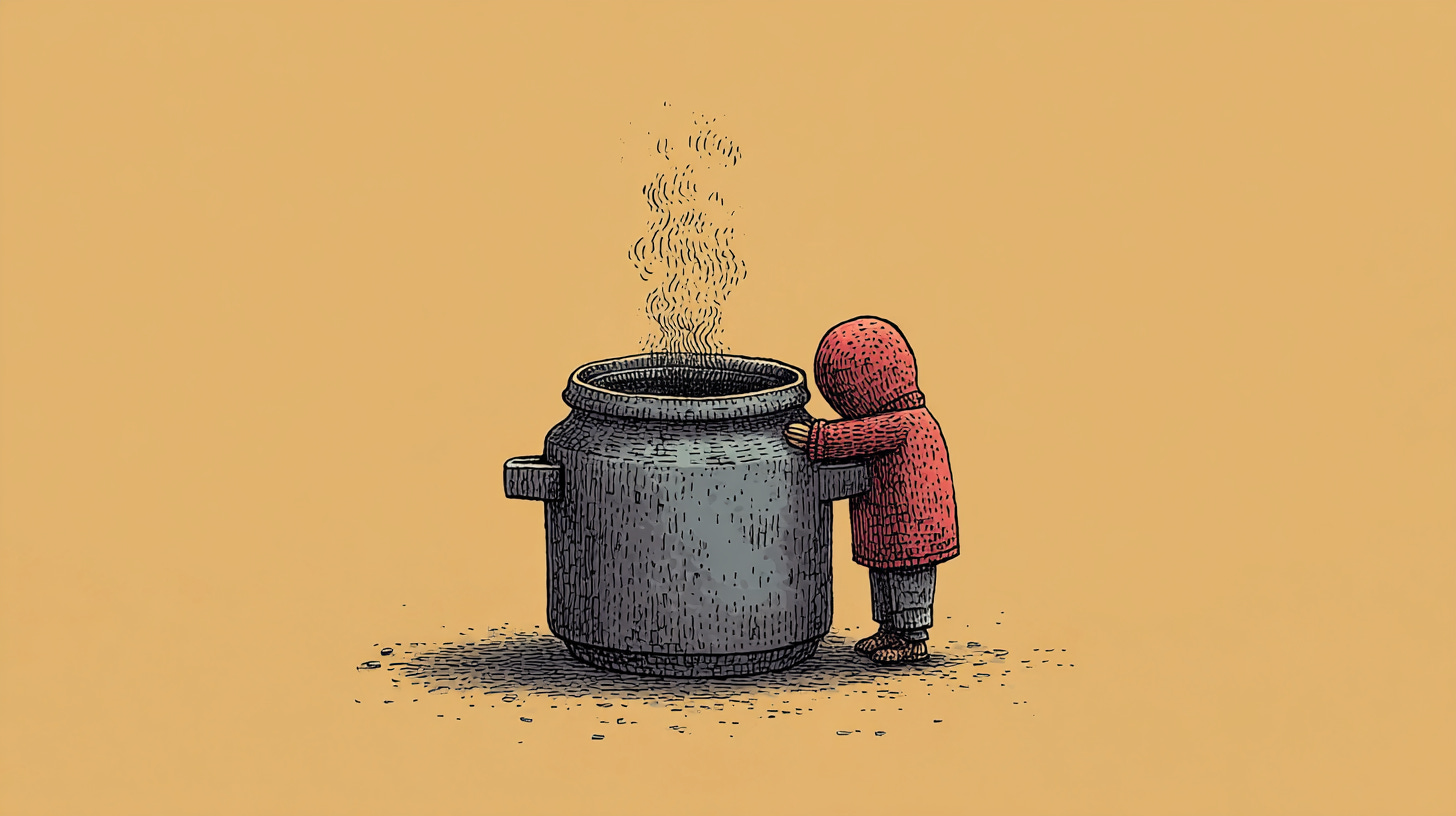
This verse lists the traits of the muhsinin, the people of excellence. The word translated as restrain does not mean the absence of anger. It means letting it fill you completely, then holding the lid down, the way you keep your hand pressed flat on a pot at full boil, steam pushing back against your palm. The Quran does not ask you not to feel the heat. It assumes the heat, and is precise about which heat: not anger in general, but the surge itself, before it reaches your hands and your mouth. It has to be contained there.
The Sunnah, the recorded sayings and practice of the Prophet ﷺ, goes further than advising calm. It disqualifies the hot state from deciding. The Prophet ﷺ said:
“A judge should not judge between two persons while he is in an angry mood.” (Sahih Al-Bukhari 7158)
The assumption is not that an angry judge is going to rule badly. It is that the ruling cannot be trusted at all. The hot state disqualifies the judge. Over 1400 years before a study explained why we should not trust our heated selves, the ruling was already written.
Islam does not leave you to beat the hot state with willpower, which is the exact thing that fails in the moment. It gives you an action. Two men were trading insults in front of the Prophet ﷺ, one of them red in the face, veins swollen, fully in the heat. The Prophet ﷺ said:
“I know a word, the saying of which will cause him to relax, if he does say it. If he says: ‘I seek Refuge with Allah from Satan’, then all his anger will go away.” (Sahih Al-Bukhari 3282)
Notice that we are not told to calm down, which doesn’t usually work. It is a small, external, repeatable act you can perform because your judgment is compromised. You need one sentence you can reach for when the cool version of you does not arrive.
The calm version of you is not coming to save the heated one. He makes the promises and is never there to keep them. So stop trusting what you decide while the heat is still in the room. Wait for the temperature to drop, and let the cooler you answer for both of them.
The heat always passes. What you do in it does not.
Something to do: Next time you feel the heat climbing in a conversation, do not answer from inside it. Say “I seek refuge with Allah from Satan,” put the reply down, and pick it up an hour later.
Something to think about: What are you deciding right now from inside a hot state, a resentment, a craving, a fear, while calling it clear thinking?
Quran translations: Sahih International. Hadith translations: Sunnah.com.