

1400 | Issue #14
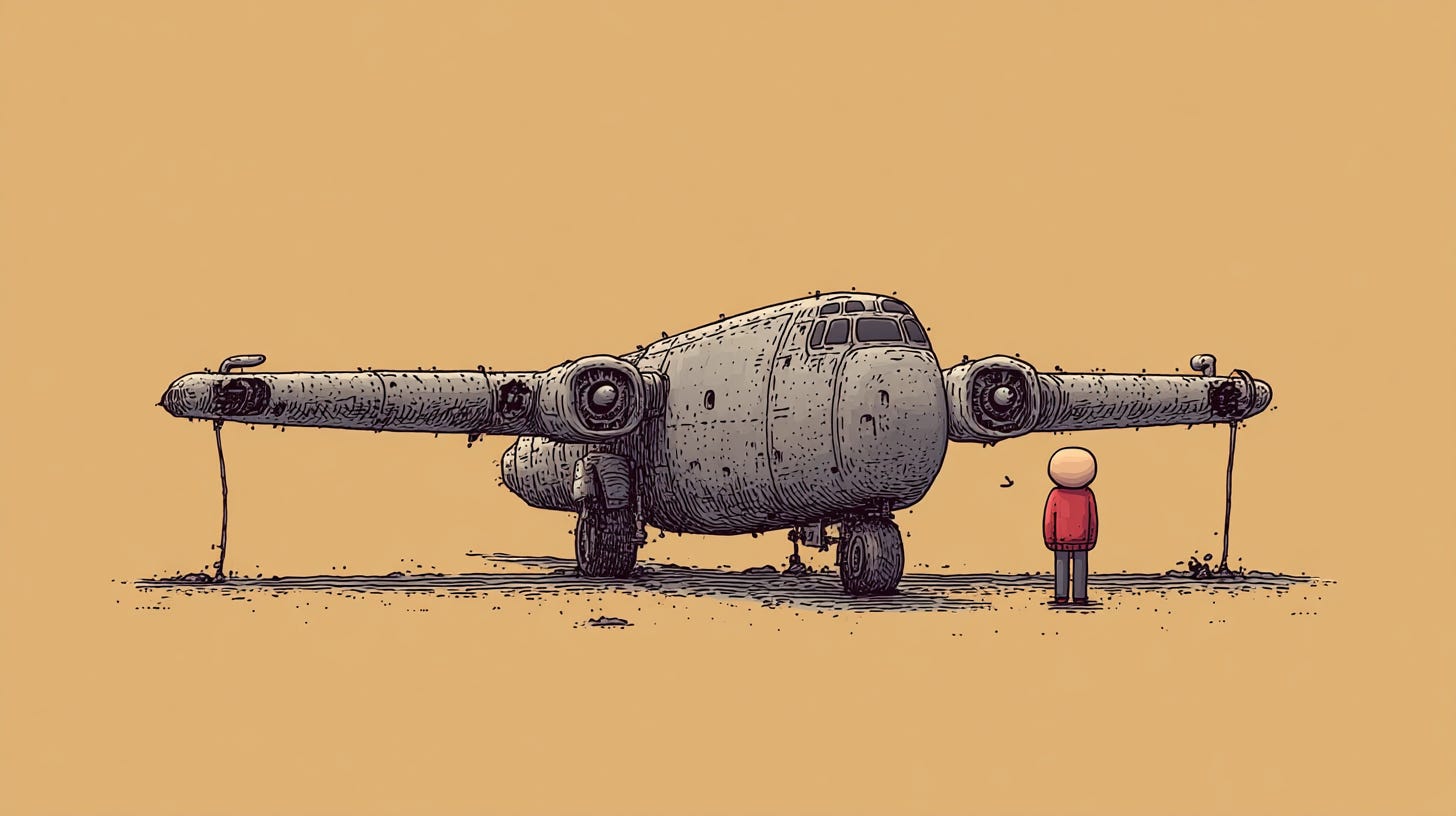
The bomber planes kept coming back from Europe shot full of holes. It was 1943, and the United States Army wanted to bolt extra armour onto them to keep them in the air. But armour is heavy, so they could only reinforce a few places. To find them, they studied the planes returning from missions and mapped where the bullet holes clustered. Wings and fuselage, hit again and again. The engines, barely touched. The obvious move was to armour the parts taking the most fire. A statistician named Abraham Wald, working with a research group out of Columbia University, told them to do the opposite. Armour the engines. The parts with no holes. His point was simple. The planes in front of them were the ones that made it home. A plane could take hit after hit to the wings and still fly. The planes hit in the engines were not in the data, because they never came back. The clean spots on the survivors were exactly where the lost ones had been shot.
This is Survivorship Bias. You learn from the survivors because they are the only ones left to ask, and the ones who did everything the same and still went down are not in the room to correct you. Success announces itself. Failure just goes missing, and we almost never think to count what is missing.
I have started far more projects than I would admit out loud. Notes full of plans, half-built systems, products I was certain about for a month and then never opened again. Most of them died, and I could not tell you the names of half of them now. The one or two that survived are the ones I reach for whenever I ask myself whether I am any good at this. That is the trick my own memory plays. When I want to know if I am the kind of person who builds things that last, I answer using only the things that lasted. The dozens that did not are gone, and they do not get a vote. They did not fail loudly. They just stopped, and stopping leaves no scar, so it never makes it into the story I tell about myself. I build the whole verdict out of the ones that survived, and never count the ones that did not.
Almost every history you have read was written by the winners. The empire that won describes the empire that lost. The civilisation that lasted explains why the others deserved to fade. We inherit the winner’s version and take it for the whole record, and that version always flatters whoever survived to tell it. It is survivorship bias baked into history.
The Quran works the other way. It refuses to only show you the ones who came through.
قَدْ خَلَتْ مِن قَبْلِكُمْ سُنَنٌۭ فَسِيرُوا۟ فِى ٱلْأَرْضِ فَٱنظُرُوا۟ كَيْفَ كَانَ عَـٰقِبَةُ ٱلْمُكَذِّبِينَ
“Similar situations [as yours] have passed on before you, so proceed throughout the earth and observe how was the end of those who denied.” (Surah Ali ‘Imran, 3:137)
Read what it actually instructs. Not study whoever came out on top. Go out, walk the land, and look hard at how it ended for the mukadhdhibin, those who denied the truth. This ayah, a verse from the Quran, sends you to the wreckage on purpose. It points you at exactly the part of the record everyone else skips.
And it names them, again and again. The people of Nuh, swallowed by the flood. Aad and Thamud, gone. Pharaoh, drowned at the height of his power. A record kept by the victors would have dropped these, the way we drop the failed founder and the startup that folded without a headline. The Quran does the reverse. It keeps pulling the destroyed back into view, the names a human history would have let vanish, because they are exactly the data everyone else leaves out.
Then it tells you why.
لَقَدْ كَانَ فِى قَصَصِهِمْ عِبْرَةٌۭ لِّأُو۟لِى ٱلْأَلْبَـٰبِ
“There was certainly in their stories a lesson for those of understanding.” (Surah Yusuf, 12:111)
The word is ‘ibrah, an Arabic term for a lesson you cross over into, taking what happened to someone else and applying it to yourself before it happens to you. The stories of those who were destroyed are not kept as decoration. They are the correction to survivorship bias, centuries before a statistician stood in front of the army and pointed at the empty spaces on the plane. The whole record, the winners and the lost, kept on purpose.
The winners are loud because they are still here to talk. The people who could have warned you are gone, so their half of the lesson never arrives. Most of what you actually need is sitting in the half of the story nobody kept. Go and read the planes that never came back.
Something to do: Pick one success you are currently trying to copy, and spend ten minutes hunting for someone who did the exact same thing and failed, then ask what was actually different.
Something to think about: When you explain why something in your life worked, how much of your evidence comes only from the things that survived?
Quran translations: Sahih International. Hadith translations: Sunnah.com.