

1400 | Issue #7
The setup is always the same. You sit down to work and open your phone to check one thing. Not to scroll, not to waste time, just one thing. You already know how this ends. An hour later you are three layers deep into something that has nothing to do with what you sat down to do, and the strangest part is that you are not surprised. You knew this would happen. You opened the phone anyway because you believed, in that specific moment, that this time you were strong enough to stop.
In 2009, Loran Nordgren, Joop van der Pligt, and Frenk van Harreveld studied what happens when people overestimate their ability to resist temptation. They called it restraint bias. The finding was consistent across contexts. People in a “cold” state, calm and not currently tempted, predict they will resist far more effectively than they actually do once the temptation is live. The bias is not about weakness. It is a miscalculation. You placed yourself within arm’s reach of the thing and believed proximity would not matter. It always matters.
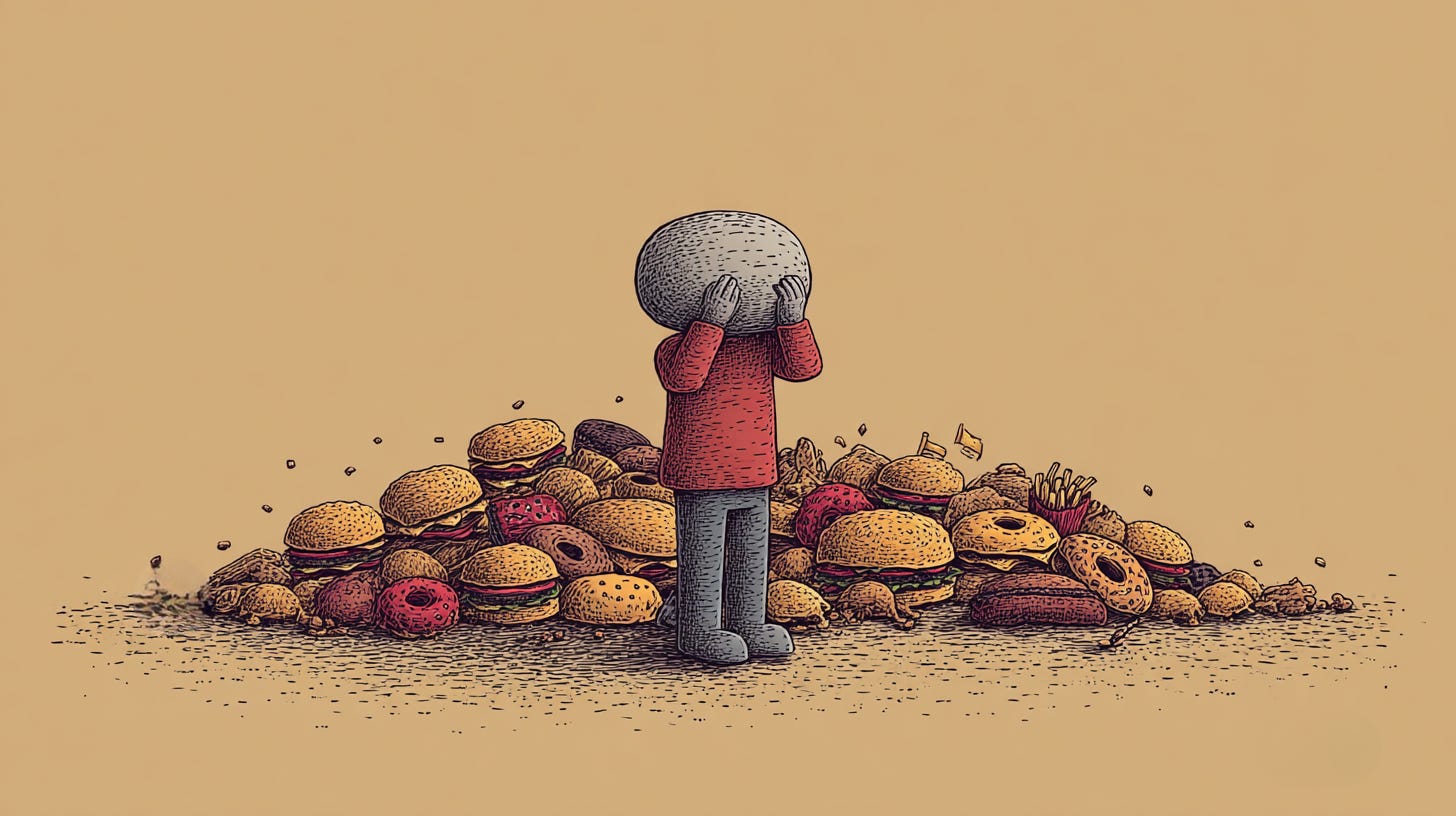
I keep telling myself I will eat better. Not a diet, not a plan, just the basic discipline of not reaching for the junk when it is sitting in the kitchen. I tell myself this every time I buy it. I will have one, maybe two, and that will be enough. It is never enough. The bag opens and something switches off. The version of me that decided this in the grocery store is not the version standing in the kitchen at 10pm. That version is already three handfuls in and negotiating with himself about whether the next one counts.
I have tried willpower with this. It does not work. What actually worked had nothing to do with discipline. I stopped buying it. I removed it from the house. When it was not there, the craving had nothing to attach to and it passed. When it was there, I lost every single time. Not most of the time. Every time. And this is not just about food. I have watched the same pattern show up in other areas of my life, different context, same ending. I tell myself I can handle being close to the thing. I cannot.
The clearest warning I have found about this was not in a study. It was written over 1400 years ago.
وَلَا تَقْرَبُوا۟ ٱلزِّنَىٰٓ إِنَّهُۥ كَانَ فَـٰحِشَةً وَسَآءَ سَبِيلًا
“And do not approach unlawful sexual intercourse. Indeed, it is ever an immorality and is evil as a way.” (Surah Al-Isra, 17:32)
The Quran does not say do not commit the sin. It says do not approach it. The word used is la taqrabu, do not come near. The Quran assumes that once you are close enough, you will not hold. The command is not “be stronger when you get there.” The command is “do not go there.” Islam draws the line before you think you need it, because by the time you think you need it, you have already crossed it.
A hadith, a recorded saying of the Prophet ﷺ, puts it in a single image:
“What is lawful is evident and what is unlawful is evident, and in between them are the things doubtful which many people do not know. So he who guards against doubtful things keeps his religion and honour blameless, and he who indulges in doubtful things indulges in fact in unlawful things, just as a shepherd who pastures his animals round a preserve will soon pasture them in it. Beware, every king has a preserve, and the things God his declaced unlawful are His preserves.” (Sahih Al-Bukhari 52, Sahih Muslim 1599a)
The shepherd does not intend to cross the boundary. He tells himself he is just grazing near it. But the flock drifts before he notices, and by the time he looks up, they are already inside. That image was given over 1400 years before any study tried to explain why people fail at the edges of what they know they should avoid.
You do not win by standing at the edge and holding your ground. You have never won that way. Nobody has. The Quran did not ask you to be strong enough. It told you to stay far enough. That is a different instruction, and it changes everything once you stop confusing the two.
Something to do: Identify one situation this week where you are relying on willpower instead of distance. Remove the proximity. Move the phone, close the tab, change the route.
Something to think about: What are you standing next to right now, telling yourself you can handle?
Quran translations: Sahih International. Hadith translations: Sunnah.com.