

1400 | Issue #22
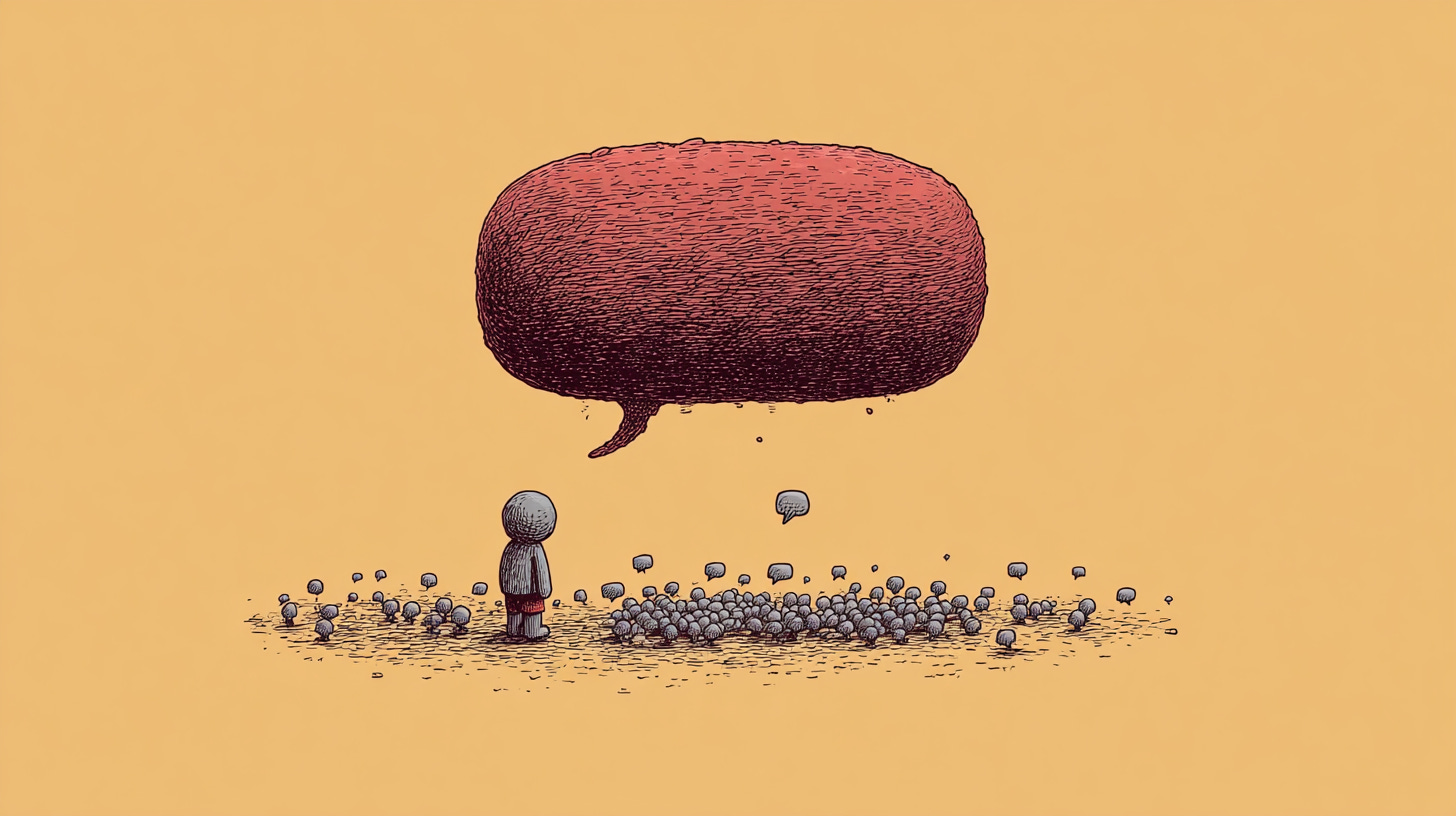
Your day was good. People said nice things. Then one sentence out of a hundred was a criticism, and that is the sentence your mind decided to loop. By the end of the night it was the headline, as if the other ninety-nine meant nothing.
In 2001, psychologists published a review titled “Bad Is Stronger Than Good.” In nearly every domain they examined, the pattern held. Bad impressions form faster and fade slower than good ones. Bad feedback outweighs good feedback. Losses hurt more than equivalent gains. Psychology calls this Negativity Bias. The scale in your head is broken in one direction, and this is how we are as humans. A blessing that is normal counts for nothing, and a wound is multiplied. It is why one criticism in a review becomes the whole review, no matter how much praise sits next to it.
I get lost in the same circle. If I list my blessings, I have more blessings and ease than the humans in the past centuries. Then one bad comment lands and the whole list goes blank. The count resets to zero and I have to rebuild it from nothing. At work I have learned to hold the line, comments and opinions do not get to me in the room. Outside the room I still have not managed it but I try to remind myself.
The fix was written down over 1400 years ago.
وَإِذْ تَأَذَّنَ رَبُّكُمْ لَئِن شَكَرْتُمْ لَأَزِيدَنَّكُمْ ۖ وَلَئِن كَفَرْتُمْ إِنَّ عَذَابِى لَشَدِيدٌۭ
“And [remember] when your Lord proclaimed, ‘If you are grateful, I will surely increase you [in favor]; but if you deny, indeed, My punishment is severe.’” (Surah Ibrahim, 14:7)
Notice what gratitude does in this verse. When practiced, it compounds the very blessings it counts. The verse takes the thing negativity bias does automatically. Where the bias books blessings at zero, gratitude books them at face value, and the verse says the balance will grow.
And then a hadith, a recorded saying of the Prophet ﷺ, does something remarkably specific. It does not tell you to feel grateful. It tells you where to point your eyes:
“Look at those who stand at a lower level than you but don't look at those who stand at a higher level than you, for that is better-suited that you do not disparage Allah's favors.” (Sahih Muslim 2963c)
Read the reasoning clause. For that is better suited that you do not disparage Allah’s favors. Disparaging favours, undercounting blessings, booking them at zero, is precisely the accounting error the research would eventually name, centuries later. And the prescription is not emotional, it is attentional. The bias operates through where the gaze rests, so the correction is issued as a gaze instruction. Point the eyes down the scale and the tally rights itself. Point them up and no quantity of blessing will ever read as enough.
This is the part that stops me. Islam does not dispute the tilt. It treats the broken scale as the starting condition, and then installs gratitude as a practice to run daily and deliberately.
Your mind counts the one wound and rounds the hundred blessings to zero. Gratitude is not a feeling. It is a recount.
Something to do: Write down three specific blessings that you would miss if they were gone tomorrow.
Something to think about: If your day was audited line by line, would the bad entries still deserve the headline?
Quran translations: Sahih International. Hadith translations: Sunnah.com.