

1400 | Issue #19
Nobody convinced you about it. The fashion trend you laughed at is now in your closet. You saw more and more people wear it and it eventually felt right. Your mind was changed by repetition alone.
Psychologist Robert Zajonc published a study in 1968 that named this. He showed people nonsense words and unfamiliar faces. Some participants saw an item once, others saw it many times. The people who saw an item more often ended up liking it more, even though the item itself was meaningless. It was the repetition doing all the work and he called this the Mere Exposure Effect.
If it was related to your wardrobe then it would be harmless, but it also affects the opinions that are repeated to you. They keep showing up until you stop checking them.
I saw it install itself in real time in a child. He started doing a trend dance from social media and did it perfectly. Nobody taught him. He learned it from the number of times that same dance appeared in front of him, performed by different people. The software was installed without authorization.
Something over 1400 years old describes this mechanism from the inside, and it is not neutral about it.
كَلَّا بَلْ رَانَ عَلَىٰ قُلُوبِهِم مَّا كَانُوا۟ يَكْسِبُونَ
“No! Rather, the stain has covered their hearts of that which they were earning.” (Surah Al-Mutaffifin, 83:14)
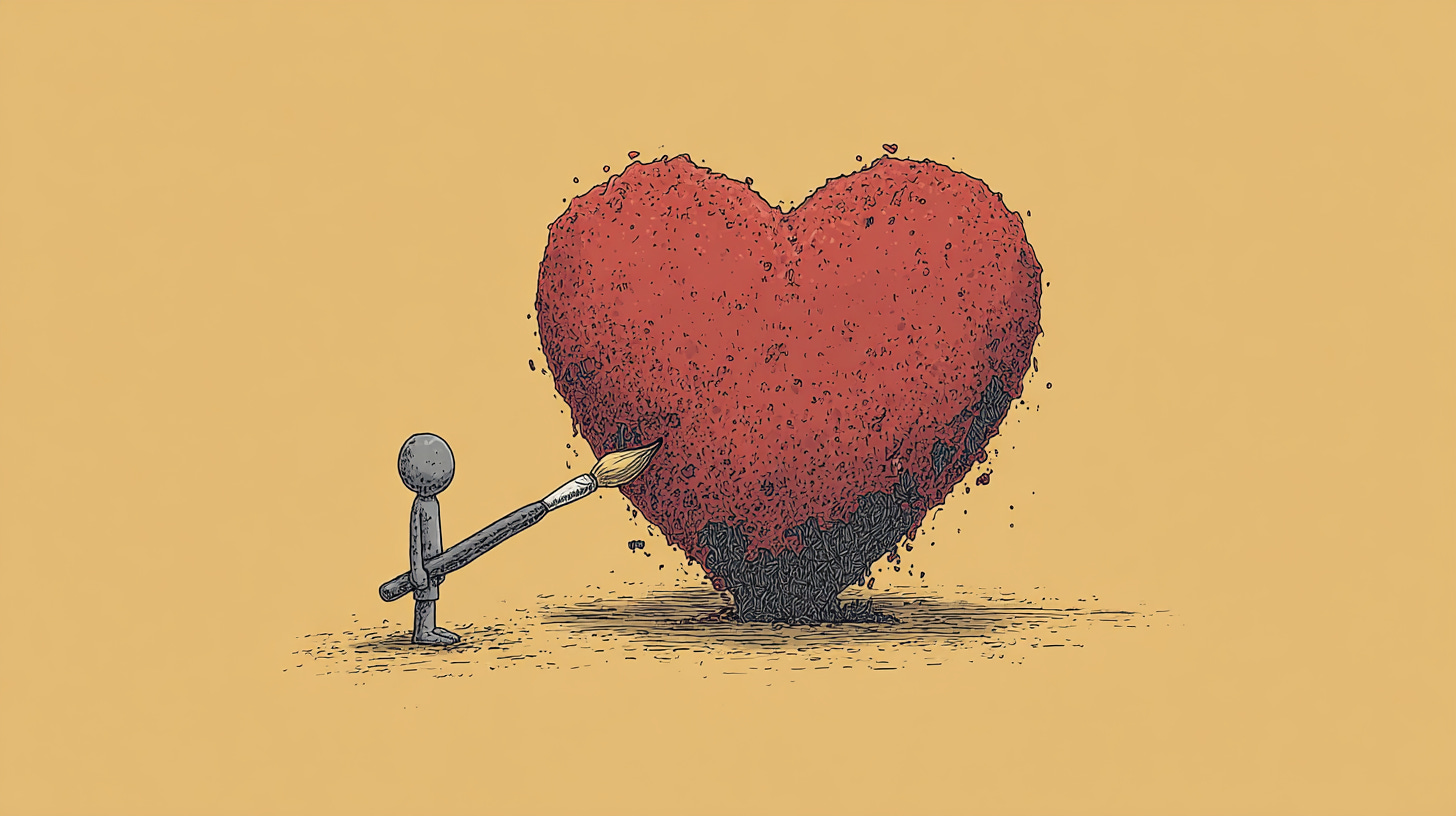
The heart was stained by what they were earning, and the verb tense is what matters here: not what they did once, but what they were doing continuously and repeatedly. The Quran’s picture of a heart is not a vault that one big event breaks into. It is a surface that repetition coats, layer by layer until perception itself changes. Zajonc measured this from the outside. This verse names what it does to the instrument doing the perceiving.
A hadith, a recorded saying of the Prophet ﷺ, then extends the principle to the exposures you did not think were exposures:
“The example of a good pious companion and an evil one is that of a person carrying musk and another blowing a pair of bellows. The one who is carrying musk will either give you some perfume as a present, or you will buy some from him, or you will get a good smell from him, but the one who is blowing a pair of bellows will either burn your clothes or you will get a bad smell from him.” (Sahih Al-Bukhari 5534)
Read it carefully, something always transfers. If you refuse to buy musk, you will still get the scent from the person carrying the musk. Also, if you keep your distance from the person blowing bellows, the smell will still follow you home. It's not only about choosing friends wisely, it's about exposure. Proximity transfers something with or without your consent. The only thing you control is what you stand next to.
Which is exactly where the antidote lands. Islam does not tell you to escape repetition. It knows you cannot. It tells you to seize it and point it.
ٱلَّذِينَ ءَامَنُوا۟ وَتَطْمَئِنُّ قُلُوبُهُم بِذِكْرِ ٱللَّهِ أَلَا بِذِكْرِ ٱللَّهِ تَطْمَئِنُّ ٱلْقُلُوبُ
“Those who have believed and whose hearts are assured by the remembrance of Allah. Unquestionably, by the remembrance of Allah hearts are assured.” (Surah Ar-Ra’d, 13:28)
The remembrance of Allah is repetition by design. The same words, returned to daily and deliberately until they coat the heart the way everything else was trying to. The entire architecture of Islamic practice, five prayers a day, the same declarations and the same recitations, is repetition wielded on purpose.
Everything around you already treats your attention as a surface to coat. The only open question is who holds the brush.
You do not get to choose whether repetition shapes you. You only get to choose what repeats.
Something to do: Open the app you use most and remove the one account whose content you never actually chose, it just kept appearing until it stayed.
Something to think about: What do you currently believe only because you have heard it often?
Quran translations: Sahih International. Hadith translations: Sunnah.com.