

1400 | Issue #15
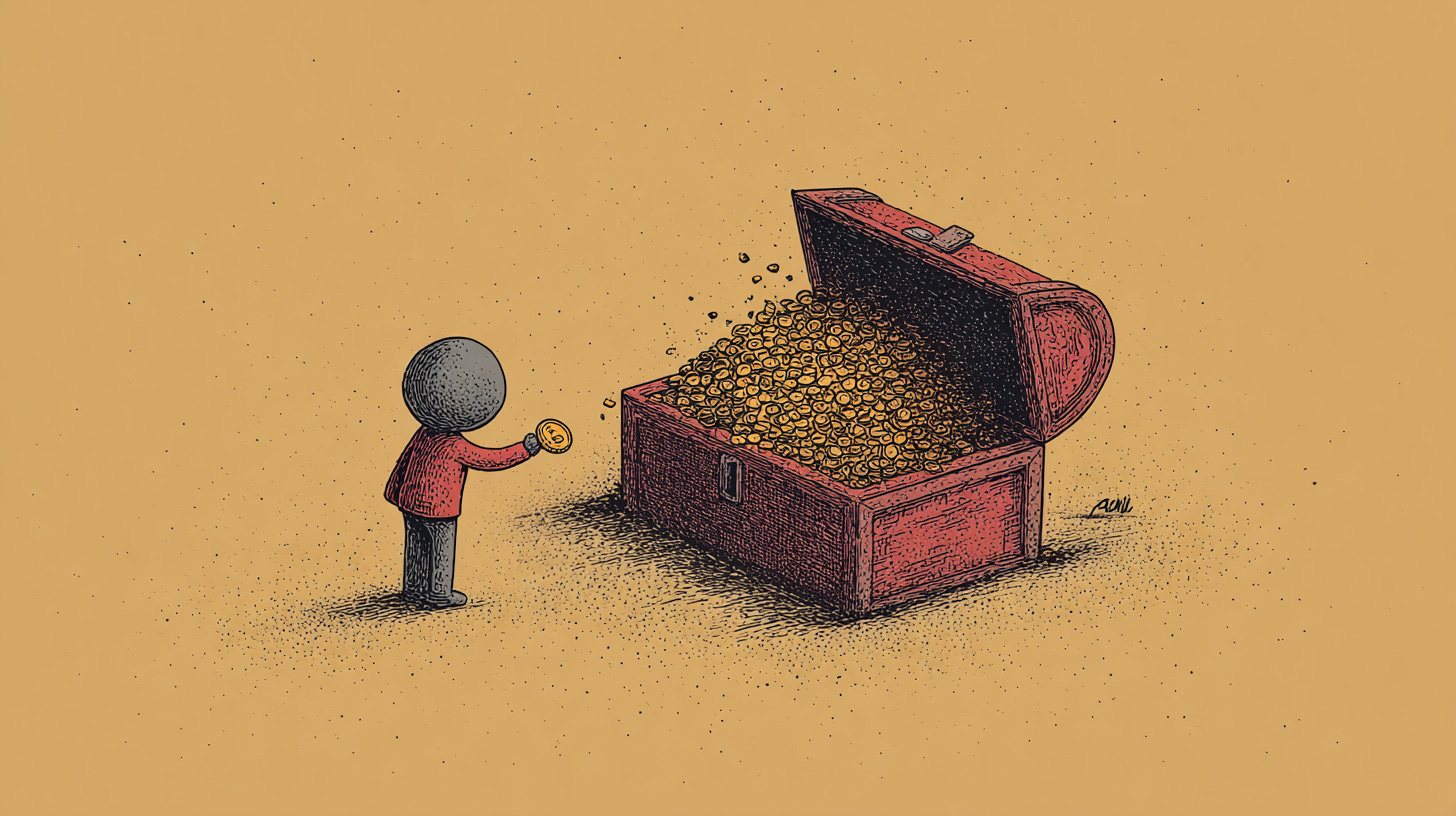
In 1975, a psychiatrist named George Ainslie put his finger on something economists had been missing for years. Building on the work of the psychologist Richard Herrnstein, he showed that the mind does not value the future at a steady, sensible rate. It plays favourites with whatever is closest. Something near to you feels far bigger than the exact same thing waiting further down the road, and the closer it gets, the more it swells. He proved it first with pigeons. Offered a small reward soon or a bigger one a little later, the birds would hold out for the bigger one while both were still far off, then break and snatch the smaller one the second it came within reach. We are no different. We just dress it up better.
It is called Hyperbolic Discounting. The patient version of you makes the plan, far in advance, when both options are at a distance. The impatient version of you shows up the moment the smaller reward is close enough to touch, and that is the version that ends up choosing.
You have lived this all week without ever naming it. One more episode beats the early night you promised yourself, every single time. The cold water is right there and your hand still reaches for the sweet drink. You swear you will take the long walk tomorrow, and tomorrow you take the sofa. The dishes can wait until morning, you decide, quietly handing them to a version of you who will be just as tired and just as unwilling. None of it feels like a real decision. It is just the near thing outvoting the far thing, again and again, while the part of you that wanted better never made it into the room.
Last night I set the alarm a full hour early. I was going to get up and have the slow, quiet start to the day I keep promising myself, the kind where I am not already behind by the time my feet hit the floor. I meant every word of it. Then the alarm went off in the dark, and the half-asleep version of me reaching to silence it made a completely different decision than the version who set it the night before. I killed it and muttered tomorrow. I have been muttering tomorrow for years.
That is the con, and I run it on myself constantly. The version of me who stays up making plans is generous and disciplined and certain, and he quietly hands every hard part to the version who has to wake up and actually do them, the one who never agreed to any of it and rarely shows up. The worst part is that I know the trick by now. I can feel myself doing it in the moment, the small comfort winning while the better day slips away, and I reach for the warm bed anyway. The one who pays for all of it is always somewhere further up the road, and he has never once been close enough for me to look in the eye.
Science put a curve to this in the last century. The trade it describes, and what it quietly costs, was named with far more weight over 1400 years ago.
كَلَّا بَلْ تُحِبُّونَ ٱلْعَاجِلَةَ وَتَذَرُونَ الْآخِرَةَ
“No! But you love the immediate, and leave [i.e., neglect] the Hereafter.” (Surah Al-Qiyamah, 75:20-21)
This is the first ayah, a verse of the Quran, and the word it uses for the thing we chase is al-’ajilah, the immediate, the reward right here in front of us. Notice the psychological accuracy here. The Quran does not imply we simply miscalculate what is near, or that we honestly misjudge its value. It says we love it. The flaw in our arithmetic stems from a deeper place: it is an appetite.
Then the Quran tells you what you actually traded away.
بَلْ تُؤْثِرُونَ ٱلْحَيَوٰةَ ٱلدُّنْيَا وَالْآخِرَةُ خَيْرٌ وَأَبْقَىٰ
“But you prefer the worldly life, while the Hereafter is better and more enduring.” (Surah Al-A’la, 87:16-17)
Look at what it corrects. What you let go of was better, and it lasted longer. Better and longer, both at once. Those are the exact two things the mind gets wrong when it shrinks the future. We treat what is far away as if it were smaller than it really is, and as if it would fade faster than it will. Two cognitive blindspots, named in one short line.
A hadith, a recorded saying of the Prophet ﷺ, shows you why the near thing fools you. The Prophet ﷺ said:
“The world compared to the Hereafter is but like what one of you gets when placing his finger into the sea, so look at what you draw from it.” (Sahih Muslim 2858, Jami` at-Tirmidhi 2323)
That is the whole trick in a single image. The drop clinging to your fingertip feels like everything, because it is the part you can touch. The sea is real, and it is endless, and it vanishes from the maths the second it is out of reach.
So what is the antidote. Not information, you already have that. The Quran names the muscle:
إِنَّمَا يُوَفَّى ٱلصَّـٰبِرُونَ أَجْرَهُم بِغَيْرِ حِسَابٍۢ
“Indeed, the patient will be given their reward without account.” (Surah Az-Zumar, 39:10)
This is sabr, patience, the strength to hold out for what is better even when it sits further away. And look at the turn the verse takes. Where the mind shrinks the future down to almost nothing, this does the exact opposite. The reward for waiting is promised without measure, without a ceiling, the one prize too big for the mind to shrink down. So the cure was never to want less. It is to see the far thing for what it really is, and then to build the one muscle that can actually wait for it.
You are not in a fight with temptation. You are in a negotiation with a future version of yourself, and right now you are winning every round by robbing him. The trade feels rational because he is far away. He will not stay far away. He never does.
Something to do: Name the one slow thing you keep pushing to next month, and do the smallest possible version of it today.
Something to think about: If the version of you who pays for today’s choice is real, and he is, what would he ask you to stop discounting?
Quran translations: Sahih International. Hadith translations: Sunnah.com.