

1400 | Issue #13
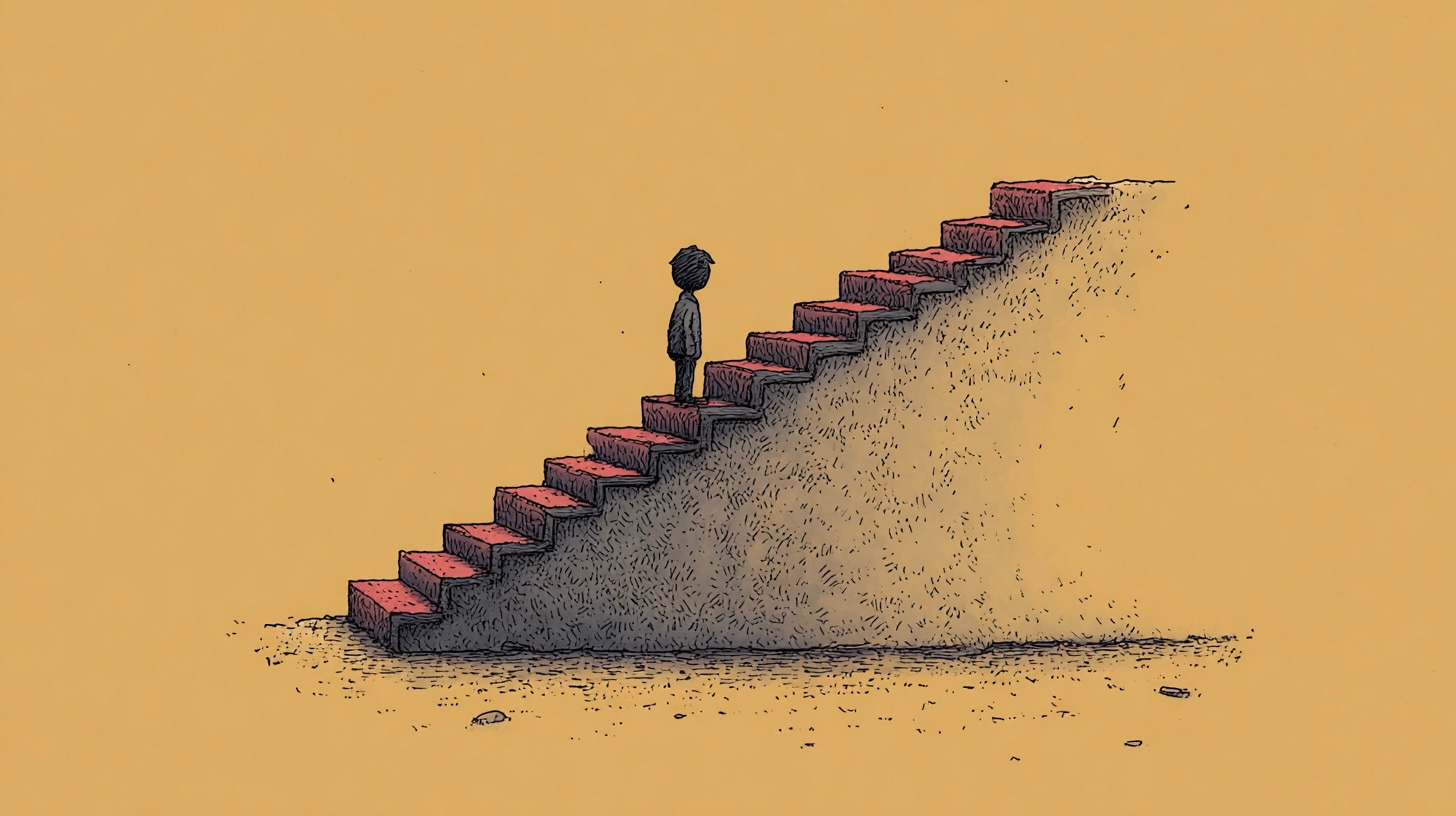
In 1978, psychologist Philip Brickman and his colleagues studied what happens to people after major life events. The finding was unsettling. Within months, people who had received what most would consider a dream outcome had drifted back near their original level of day-to-day happiness. The event did not change them. It changed what counted as enough, and the wanting kept moving. The same was true in reverse. People who had experienced major setbacks also drifted back toward their original baseline. The mind absorbs gains, absorbs losses, and pulls you back toward where it started. Psychologists call this Hedonic Adaptation. Whatever you acquire gets absorbed into normal, and normal never feels like enough.
The car you waited two years for is just the car you drive now. The promotion you chased is just your job. The house, the phone, the watch, all of it followed the same arc. There was a spike of joy when it arrived, real and sharp, and then a slow drift back to exactly how you felt before. You did not notice the drift. You only noticed that you wanted the next thing.
I keep a mental list of things that were going to make me feel like I reached my goals. A number in the bank. A piece of gear I researched for weeks. A milestone I was sure would settle something in me. I have hit several of them. The strange, slightly embarrassing truth is that I cannot remember the feeling of arriving at any of them, because by the time I got there I was already three items down the list.
I caught myself doing it last month. I got the thing, felt the spike, and inside a week I was researching the upgrade. I noticed it happening in real time and I still could not stop the wanting from moving. That is the part nobody warns you about. You can see the trap clearly and still be standing in it.
Modern psychology can describe this trap. The standard advice for it is gratitude, savoring, mindfulness, counting your blessings. These help. They do not change the mechanism. You are still measuring richness by what is in your hands. You are just temporarily reminding yourself to feel okay about it.
This pattern has a name older than the study.
أَلْهَىٰكُمُ ٱلتَّكَاثُرُ حَتَّىٰ زُرْتُمُ ٱلْمَقَابِرَ
“Competition in [worldly] increase diverts you. Until you visit the graveyards.” (Surah At-Takathur, 102:1-2)
The word here is takathur, an Arabic term for the endless drive to have more. This ayah, a verse from the Quran, uses the verb alhakum, which carries the sense of being diverted or distracted. The chase is described as a distraction. Not as wrong in itself, but as something that pulls your attention off course.
A hadith, a recorded saying of the Prophet ﷺ, sits beside these verses with an image you do not forget. The Prophet ﷺ said:
“If Adam's son had a valley full of gold, he would like to have two valleys, for nothing fills his mouth except dust.” (Sahih Al-Bukhari 6439)
Read it again. A valley of gold, and the immediate response is not enough, I want two. The gain is absorbed, the baseline resets, the wanting moves on. The only thing that finally fills the mouth of the son of Adam is dust. Notice the resonance between the two texts. The surah closes at the graveyards. The hadith closes at dust. Two sources, pointing at the same hollow in the human chest, over 1400 years before any researcher tried to measure it.
There is also an antidote. The Prophet ﷺ said:
“Wealth is not in having many possessions, but rather (true) wealth is feeling sufficiency in the soul.” (Sahih Al-Bukhari 6446, Sahih Muslim 1051)
This is qana’ah, an Arabic term for contentment, the settledness of a heart that is full regardless of what the hands are holding. Notice what this reframes. Richness moves from what is in your hands to what is in your chest. It is the one definition of wealth that does not adapt away, because it was never tied to an external thing that the mind could absorb into normal.
This is also not gratitude in the modern sense. Gratitude tries to make you feel better about what you already have. Qana’ah relocates where wealth lives entirely. The hand will always reach. The chest can be still. One is a coping mechanism. The other is a change of address.
You were never going to win the chase. What counts as enough moves every time you reach it. The way off the treadmill, as far as I can tell, is to stop measuring richness by what your hands have collected, and start measuring it by what is sitting in your chest.
Something to do: Pick one thing you own right now that you once desperately wanted, and sit with it for a minute as if you just received it today.
Something to think about: If the next thing you are chasing also resets your baseline within a month, what are you actually chasing?
Quran translations: Sahih International. Hadith translations: Sunnah.com.