

1400 | Issue #12
In 1960, psychologist Peter Wason ran an experiment that looked simple. He showed participants the sequence 2, 4, 6 and told them it followed a rule he had in mind. Their job was to figure out the rule by testing their own sequences. Every time they proposed a sequence, he would tell them whether it fit or not.
Most people looked at 2, 4, 6 and guessed the rule was “ascending even numbers.” So they tested 8, 10, 12. Yes. Then 14, 16, 18. Yes. Then 20, 22, 24. Still yes. Every sequence came back correct. Their confidence grew with each answer, and when they felt sure, they announced their rule.
They were wrong.
Not because their sequences were wrong. Every sequence genuinely followed the rule. The problem was their understanding of what the rule actually was. The real rule was far simpler. It was just “any three numbers in ascending order.” Their sequences fit, but so would 1, 2, 3. So would 5, 10, 100. They had found a rule that worked, and mistook it for the rule.
They only tested sequences designed to succeed. And because every test came back positive, they took that as proof. It was not proof. It was the absence of a real challenge.
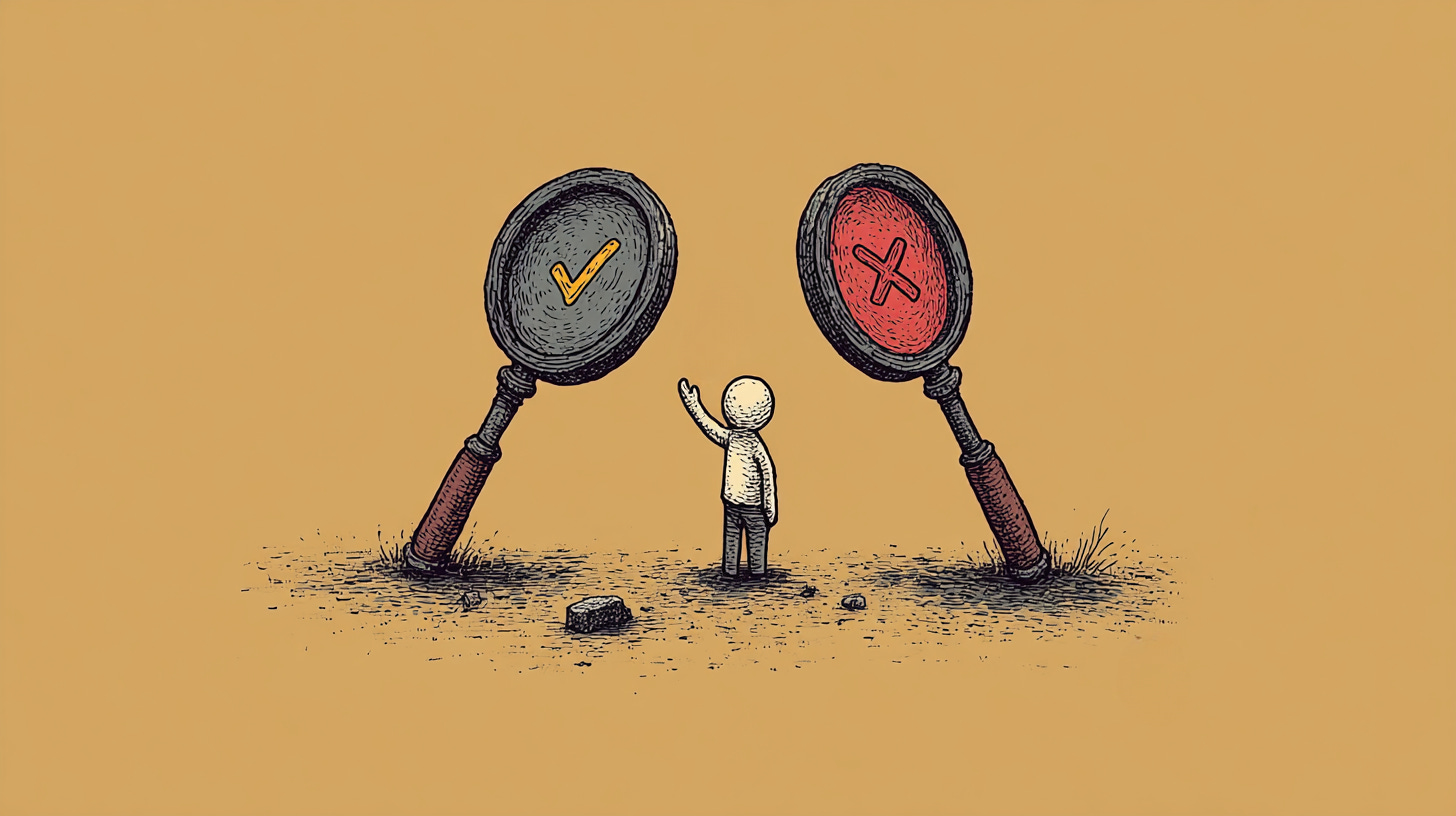
This is confirmation bias. The habit of looking for what confirms what you already believe, and quietly filtering out whatever does not. It is not stupidity. It operates most powerfully in intelligent people, because the smarter you are, the better you are at building a case for whatever you have already decided is true.
For ten years I worked in a role where I told myself a very specific story about where it was heading. The story was not a lie. But it was only ever tested in one direction. When something went well, I noticed. When I got a project that stretched me or a result that looked like progress, I collected it. Filed it. Built the case. When the signals pointed somewhere less comfortable, I did not reject them. I just did not go looking for them. I kept testing in one direction, collecting the evidence that confirmed the story, and never once ran the test that might contradict it.
I had met incredible people and learned from mentors who shaped how I think. I do not regret a single year. But the function itself had stopped growing. It was the same role on repeat with minor variations, and I had been framing those variations as progress because that was the only version of the story I was willing to hear.
My wife asked me a question one evening. She asked where I saw myself in the future. I answered immediately, and I sounded sure. It was only later that I realised every piece of evidence behind that answer had been hand-picked. I had not looked at the facts and drawn a conclusion. I had started with the conclusion and only ever looked for facts that supported it. When I switched jobs, every day was a different problem. Nothing repeated. I am learning at a pace I had forgotten was possible, and that contrast made something obvious I had been avoiding. I had not been thinking clearly about the previous ten years. I had been thinking selectively. And selective thinking feels identical to clear thinking while you are doing it. That is what makes it dangerous.
This pattern has a name older than the study.
The Quran does not use the phrase “confirmation bias.” It uses a word that cuts deeper: hawa. Hawa means desire, the inner pull that shapes what people are willing to see and what they are not. And the Quran describes what happens when hawa takes over the way a person processes reality.
أَفَرَءَيْتَ مَنِ ٱتَّخَذَ إِلَـٰهَهُۥ هَوَىٰهُ وَأَضَلَّهُ ٱللَّهُ عَلَىٰ عِلْمٍۢ وَخَتَمَ عَلَىٰ سَمْعِهِۦ وَقَلْبِهِۦ وَجَعَلَ عَلَىٰ بَصَرِهِۦ غِشَـٰوَةًۭ
“Have you seen he who has taken as his god his [own] desire, and Allah has sent him astray due to knowledge and has set a seal upon his hearing and his heart and put over his vision a veil?” (Surah Al-Jathiyah, 45:23)
What the experiment caught in three numbers, the ayah catches in how a person receives truth.
The Quran shows the same bias in a different form:
وَإِذَا قِيلَ لَهُمُ ٱتَّبِعُوا۟ مَآ أَنزَلَ ٱللَّهُ قَالُوا۟ بَلْ نَتَّبِعُ مَآ أَلْفَيْنَا عَلَيْهِ ءَابَآءَنَآ
“And when it is said to them, follow what Allah has revealed, they say, rather, we will follow that which we found our fathers doing.” (Surah Al-Baqarah, 2:170)
New information arrives. It is clear, it is direct, it comes from the highest possible source. The response is not evaluation. It is not even disagreement. It is a retreat to what was already believed. The inherited position is treated as evidence. The new evidence is treated as a threat. That is confirmation bias operating at civilisational scale. Not because the truth is unclear. Because the filter was set before the truth arrived.
And then the diagnosis:
لَهُمْ قُلُوبٌ لَّا يَفْقَهُونَ بِهَا وَلَهُمْ أَعْيُنٌۭ لَّا يُبْصِرُونَ بِهَا وَلَهُمْ ءَاذَانٌ لَّا يَسْمَعُونَ بِهَآ
“They have hearts with which they do not understand, they have eyes with which they do not see, and they have ears with which they do not hear.” (Surah Al-A’raf, 7:179)
The organs work. The hardware is fine. But the software sitting between the evidence and the conclusion is corrupted.
وَلَا تَقْفُ مَا لَيْسَ لَكَ بِهِۦ عِلْمٌ إِنَّ ٱلسَّمْعَ وَٱلْبَصَرَ وَٱلْفُؤَادَ كُلُّ أُو۟لَـٰٓئِكَ كَانَ عَنْهُ مَسْـُٔولًۭا
“And do not pursue that of which you have no knowledge. Indeed, the hearing, the sight and the heart - about all those [one] will be questioned.” (Surah Al-Isra, 17:36)
The ayah says the hearing, the sight, and the heart will be questioned. Not the evidence that reached them. What they did with it.
The most dangerous lies are rarely the ones someone else tells. They are the ones a person tells themselves, and then spends years collecting evidence for.
Ten years of a hand-picked story taught me something I was not ready to learn. Certainty feels the same whether it is earned or manufactured. The test is not how confident the conclusion feels. The test is whether it was ever allowed to be wrong.
Something to do: Take one belief held strongly, about work, about relationships, about the self, and spend ten minutes actively searching for evidence that it might be wrong.
Something to think about: If the truth contradicted the thing felt most certain, would it even be recognised?
Quran translations: Sahih International. Hadith translations: Sunnah.com.